Advanced technology for precision breast diagnostics
The evolution of diagnostic imaging in the field of breast health is progressively moving towards high-definition systems capable of combining diagnostic quality, radiation dose reduction, and greater operational efficiency to improve the prevention path for breast diseases.
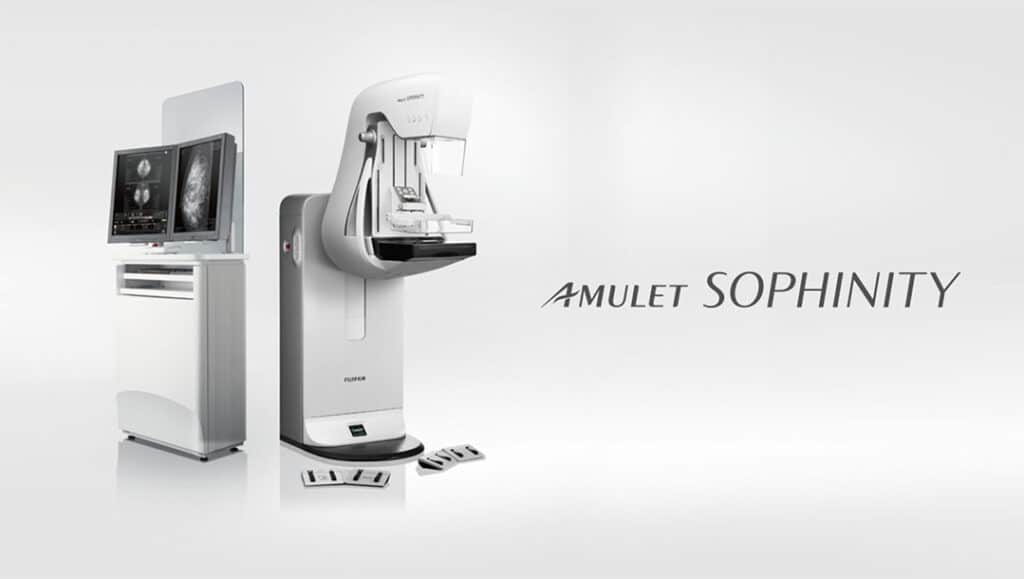
The introduction of Amulet Sophinity digital mammography at Villa Stuart, developed by FUJIFILM Healthcare, is part of a breast diagnostic model patient-centered and oriented towards precision medicine, where technological innovation, radiological expertise, and multidisciplinary pathways work in synergy.
What is digital mammography?
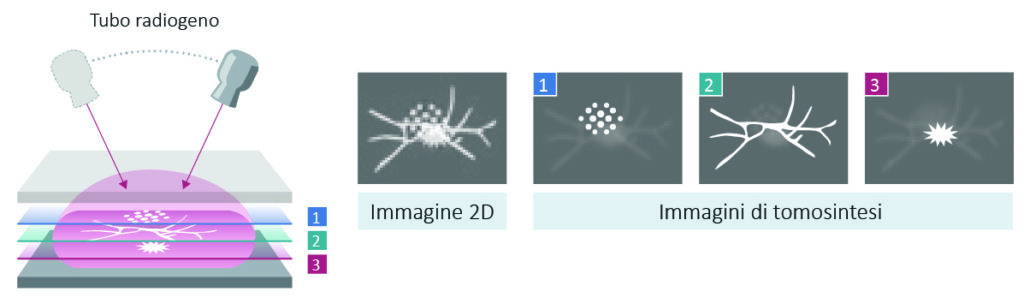
Digital mammography is a radiological breast examination used for the prevention and early diagnosis of breast cancer. Through tomosynthesis (3D), it acquires multiple images from different angles to reconstruct the breast in layers (3D), ensuring superior resolution, greater detail, and the ability to process images on a computer.
Furthermore, the direct digital technology of Amulet Sophinity digital mammography reduces the X-ray dose by up to half compared to traditional mammography.
Early diagnosis through detailed imaging: the true life-saving tool
Identifying a lesion in its early stages means increasing the chances of recovery and reducing the impact of therapies. For this reason, the quality of mammographic images plays a decisive role:
- Excellent rendering of low-contrast structures and small microcalcifications thanks to the FFDM system (Full Field Digital Mammography) integrated with a high-sensitivity amorphous selenium (a-Se) direct digital detector
- Highly detailed visualization of the glandular architecture with high accuracy in identifying suspicious changes at an early stage through the 50 μm pixel pitch, which allows for particularly high spatial resolution

Intelligent technology at the service of women
The 3D breast tomosynthesis of Amulet Sophinity digital mammography (DBT – Digital Breast Tomosynthesis) allows for the acquisition of multiple images at different angles to generate stratified reconstructions of the breast parenchyma.
3D reconstruction allows the radiologist to analyze the breast “slice by slice”, virtually “flipping through” the breast tissue layer by layer, reducing anatomical overlaps and increasing the ability to identify even lesions that would have remained hidden in traditional two-dimensional mammograms.
Radiation dose optimization
Amulet Sophinity digital mammography uses advanced Automatic Exposure Control (AEC – Automatic Exposure Control) algorithms to modulate acquisition parameters based on breast density and the thickness of the examined tissue, automatically adjusting the X-ray dose according to the type of breast examined.
The position of the mammary gland is analyzed starting from low-dose pre-exposure images. The high quantum efficiency of the detector allows for high-definition diagnostic images using a relatively low X-ray dosage, in line with ALARA (As Low As Reasonably Achievable) principles, the international reference in medical radiation protection.
AI at the service of professional expertise
Amulet Sophinity digital mammography is equipped with an advanced digital platform, integrated with AI-based tools, designed to optimize examination efficiency by supporting the radiologist during both the image acquisition phase and the analysis of the resulting images.
Furthermore, the platform optimizes breast positioning in the equipment, thereby reducing the possibility of technical errors and improving reproducibility over time.


Greater comfort and high image quality
Reduction of motion artifacts: the motorized gantry allows the patient to be positioned more comfortably and precisely depending on the type of examination to be performed, resulting in greater perceived comfort and stability during image acquisition.
Reproducibility of serial examinations: the Positioning MAP uses anatomical information acquired in previous examinations to assist the technician in positioning the patient. This makes it possible to reproduce the same breast position during subsequent examinations, ensuring that mammographic images are comparable over time and increasing diagnostic reliability.


Pain reduction through Comfort Comp
The Comfort Comp of Amulet Sophinity digital mammography provides automatic breast compression control, allowing for a reduction in the pressure exerted during the examination and the resulting discomfort. It also includes servo-assisted compression adjustment with constant monitoring of the breast during its positioning on the compression plate.
The new uniform compressor drive mechanism ensures a more even distribution of pressure on the breast tissue.

29kV 44mAs 0.83mGy
33mm 102N
Image Copyright FUJIFILM Healthcare

29kV 44mAs 0.83mGy
34mm 62.8N
Image Copyright FUJIFILM Healthcare
Vertical biopsy: imaging, software, and intervention work together as a single system
When a suspicious lesion is identified, the next step is to obtain a tissue sample. In the vertical biopsy system, the needle descends perpendicularly to the breast compression plane, offering the advantage of greater trajectory stability and more accurate depth control.
During the biopsy, the radiologist views the breast diagram, target coordinates, and information on the selected needle, including diameter and sampling window aperture, in real time on the monitor. In this way, the biopsy is performed following a three-dimensional map with precise identification of the sampling site.
Moving from “estimating” the lesion’s position to identification via 3D mapping means:
- increasing the probability of hitting the target on the first attempt;
- decreasing the duration of the procedure;
- limiting patient discomfort
- reducing non-diagnostic samples.
Villa Stuart’s commitment: high-quality technology at the service of top professionals
In an era where prevention is the greatest ally of women’s health, technologies such as Amulet Sophinity digital mammography are valuable allies for increasingly precise, rapid diagnostics that are attentive to patient well-being.
High image quality, reduced radiation dose, and greater patient comfort transform mammography from a simple clinical check-up into a true tool for personalized preventive medicine.
*Text based on information from the healthcare-eu.fujifilm.com website